

Miller moths migrate from the western Great Plains to the Rocky Mountains each year, passing through cities, towns, and suburbs on their way. They mostly cause minor annoyance, but occasionally they become a major disruption and become part of the story. And each spring, the media across the region warn of the impending invasion. A 1921 headline announced, “A Plague of Miller-Moths.” Sixty-one years later, the Associated Press proclaimed, “Miller moths swarm over Denver metropolitan area.” The papers often turn to entomologists to predict the swarm season; “Miller moth invasion expected to be heavy this spring” a Douglas County, Colo., newspaper printed in 1998.
In 1912, newspapers reported miller moths caused delays for passenger trains between Kansas City and Denver: swarms piled on the rails “like grasshoppers,” greasing them so badly that wheels spun and the trains couldn’t make their schedules. Passengers even claimed the swarms “darkened the sun” on the plains east of Denver.1“Moths Hold Up Passenger Trains,” El Paso Herald (El Paso, TX), July 13, 1912, 1, accessed December 17, 2025.
In Kansas, one paper ran a snarky correction in 1925: a supposed witness claimed the moths were so loud you couldn’t hold a conversation and that a woman struck fourteen matches before she could light a lamp because other moths “put out” the flame with the commotion of their wings.2Brown County World (Hiawatha, KS), June 12, 1925, 6, accessed December 17, 2025. The snark was probably a reaction to the swarm, as swarms are extremely unnerving for people, and there’s some science behind it. I recommend The Infested Mind by Jeffrey Lockwood for background and the science behind it.
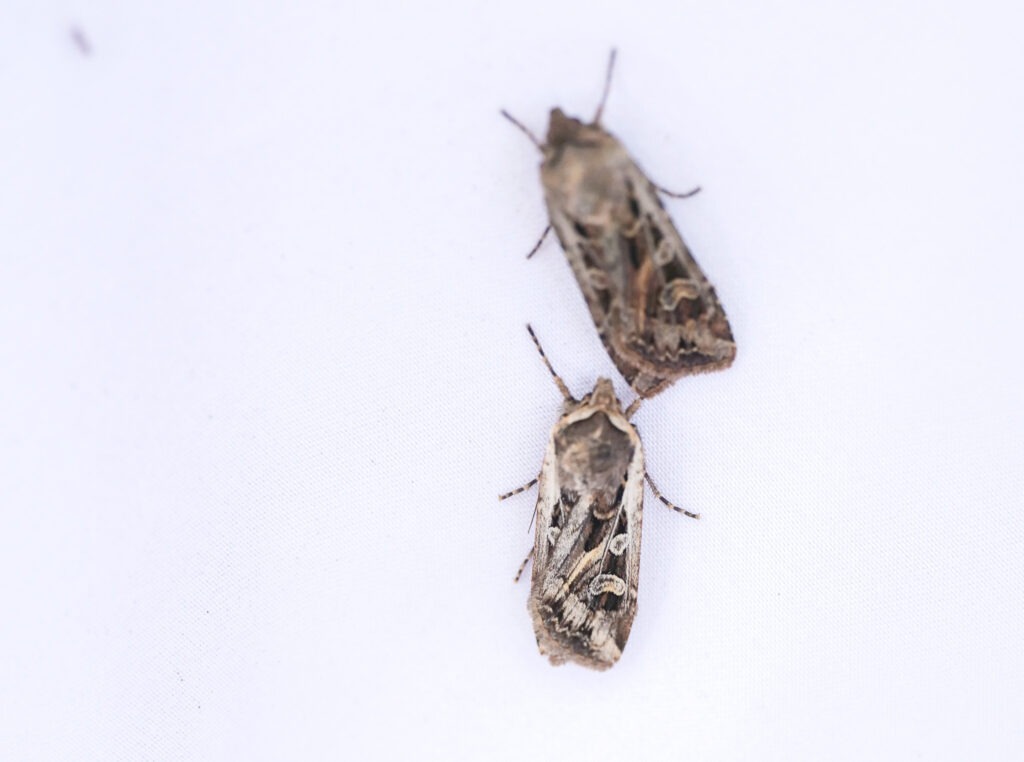
The “miller” in miller moths comes from the floury dust on the wings, like an old-fashioned grain grinder. This is often explained in newspaper “what is a miller?” blurbs and kid-focused columns.3“Miller Moth Is a Dusty Mite,” The San Bernardino County Sun (San Bernardino, CA), September 2, 1966, 6, accessed December 17, 2025. These moths, also called Army Cutworm moths or Euxoa auxiliaris, start as caterpillars on the plains, feeding on a variety of plants. By late spring, those caterpillars have pupated, and the miller moths emerge. They then travel a hundred miles or more into the Rocky Mountains, and while research isn’t conclusive, the likely reason for the journey is nectar from wildflowers and a cooler, damper climate. While the moths are in the mountains, they don’t mate or lay eggs. They just feed on nectar. They feed so much that they achieve up to 72 percent body fat, making them one of the fattest animals on Earth.4Steven P. French, Marilynn G. French, and Richard R. Knight, “Grizzly Bear Use of Army Cutworm Moths in the Yellowstone Ecosystem,” International Conference on Bear Research and Management 9, no. 1 (1994): 389–399. In the fall, they make the journey back to the plains where they mate, lay eggs, and die.
One of the most memorable years for miller moths in Denver was 1981. An Associated Press story described flyswatters in the operating room at Denver General Hospital as staff batted at moths that threatened to contaminate medical equipment. They did have to discard contaminated instruments.5“Miller Moths Swarm over Denver Metropolitan Area,” Tampa Bay Times (St. Petersburg, FL), June 15, 1981, 3, accessed December 17, 2025. The same report described a TV station knocked off the air when tens of thousands of moths clogged or shorted equipment at a transmitter site. Elsewhere, moths repeatedly shut down a New Mexico radio transmitter, forcing engineers to drive a 250-mile round trip night after night to reset it.6“Miller Moths Bug Engineers,” The Indiana Gazette (Indiana, PA), May 20, 1985, 6, newspaper clipping.
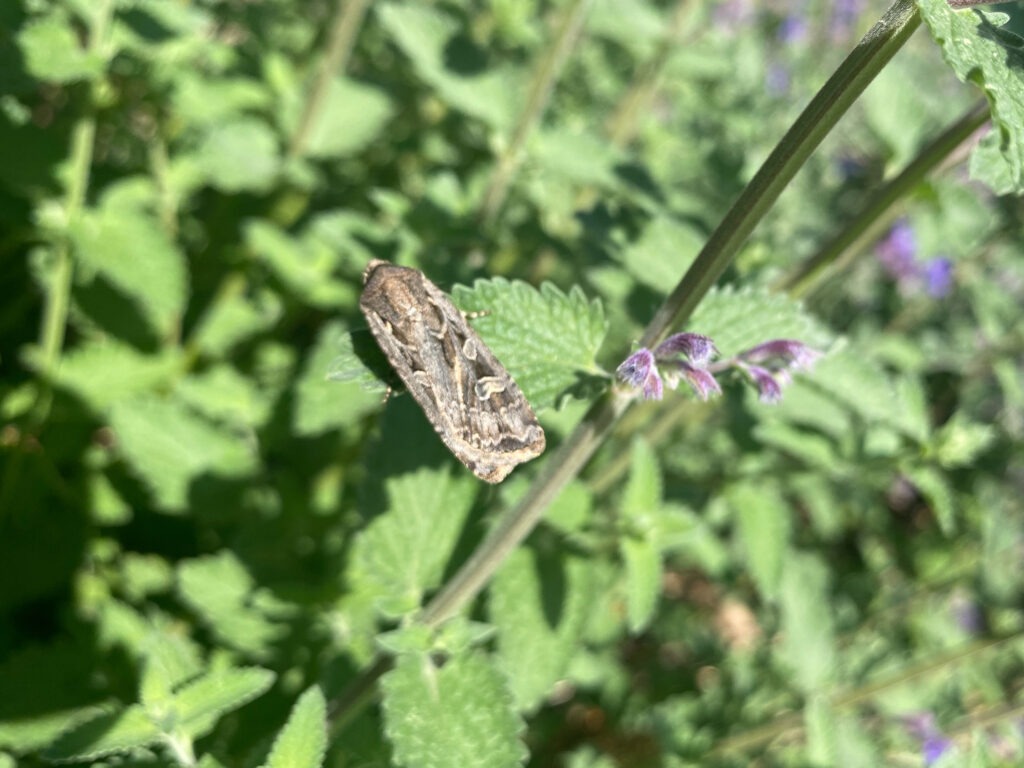 Sometimes the miller moths make themselves famous. In 1979, a miller moth joined Colorado Gov. Richard Lamm on national television. As the Rocky Mountain News described it: “At one point the governor noticed the fluttering nuisance and did the only proper thing he could do on nationwide television. He smiled.”7“Moth Bugs Lamm on National TV,” Rocky Mountain News (Denver), May 22, 1979. That same year, a theater review noted an “unscheduled appearance” of a miller moth onstage that actor Brian Bedford simply folded into his performance.8“Brian Bedford Stars in the Murder Mystery ‘Deathtrap’ at the Denver Auditorium Theater,” Rocky Mountain News (Denver), July 19, 1979. In 1984, Denver Traffic Court gained what a judge later called the “infamous Miller Moth Rule,” after a driver blamed a rear-end crash on a moth in her car and was acquitted—despite the accident occurring in the dead of winter, ten below zero.9“Excuses, Excuses,” Rocky Mountain News (Denver), July 2, 1984, newspaper clipping.
When they aren’t annoying the humans of the Front Range, they do provide some essential ecological roles. They are an important food source for birds and bears. Mike Johnson, Grand County extension agent, in an interview with the Independent Times back in 2003.10Lisa Church, “Army Cutworm Hordes Have Come Back as Swarms of Miller Moths,” The Times-Independent (Moab, UT), June 5, 2003, 2, newspaper clipping.
“They contain the highest amount of nutrition per gram of any bear food source,” Johnson said. “Researchers have found that grizzly bears in Yellowstone [National Park] were ingesting as much as 20,000 calories per day by feeding on moths.”
Grizzlies love them, but what about people? Unlike the periodic cicada emergences, the miller moths have not inspired any culinary traditions. They are edible, and people who have eaten them say they don’t have much flavor.11“Miller Moths: ‘They’re Super Healthy, You Should Eat Some,’” Reddit post, r/Albuquerque, accessed March 15, 2026, https://www.reddit.com/r/Albuquerque/comments/13sv516/miller_moths_theyre_super_healthy_you_should_eat/
In 1991, a chocolate company in Denver’s bougie Cherry Creek neighborhood had a miller moth celebration in chocolate. But they didn’t create chocolate-covered miller moths; they made moth-shaped chocolates. Reports say they did a brisk business.12Marty Meitus, “Cherry Creek Shop Shows That Chocolate Improves Anything — Even Moths,” Rocky Mountain News (Denver), June 8, 1991, newspaper clipping.
Virtually everyone has been annoyed by them or has a miller moth story to tell, and here’s mine. When my husband and I bought our home in Aurora in 2023, it was a peak year for miller moths. As we explored our potential new homes, we found moths in every nook and cranny. Windowsills, light fixtures, and room corners were littered with dried-out carcasses. As new residents to the state, we didn’t know the extent of miller moth invasions, but our realtor assured us that by complaining about them incessantly, we’d become full-fledged Front Rangers.
In a way, the miller moths bring the people of the Front Range together. They’ve been part of the Front Range story since the first streetlights went up, and will inspire more stories for generations to come.
Like weird stories about bugs?
History, but with Bugs explores how insects have shaped our horror, folklore, history and popular culture.
Subscribe free on Substack or support the project on Patreon.
